
Conversations With Friends (About Birdwatching)
Socio-political notes from an amateur

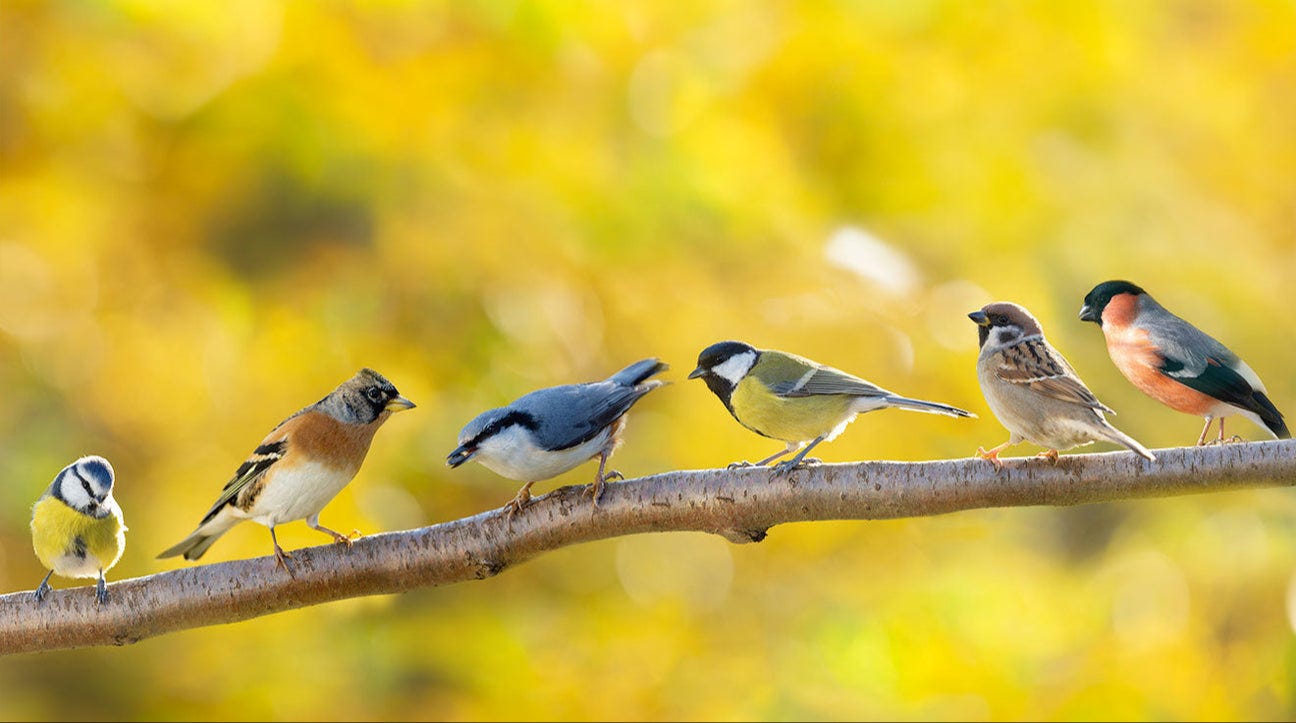
Birdwatching is cool. Minus the optional costs of binoculars and public transport, it is an entirely free pursuit. The task is simple: walk through a forested area, listen for birdsong, and look around.
It’s unlikely to catch sight of a bird for more than a few seconds, and usually the most prolonged interactions are those with species that would be ignored on a daily basis. Spotting rarer birds requires patience and diligence in equal measure, and an understanding that one some days you will neither spot or hear anything particularly exciting.
Something about it has clicked with Britain’s youth, however. Birdwatching is the second-fastest growing hobby in the UK, with a 216% increase in the number of avian-aware-adolescents (if you will) since 2018.
Alongside this, videos of birds feasting on a delicately arranged smorgasbord of nuts and seeds continuously attract millions of views on social media, while people’s newfound obsession with using Merlin Bird ID - basically Shazam for birds - has attracted new forms of post-ironic content, most notably using US politician Eric Mays’ infamous “I’m not playing on my phone, I’m taking care of business” line. The RSPB even hosted a ‘Bird of the Year’ competition on Instagram promoted via 8-bit titles and music, with the Swift taking home the inaugural prize.
There’s something to be said for this new-found fascination and its grip on Gen-Z.
Behind the humour, the Eric Mays ‘Taking Care of Business’ reels present birdwatching as something that can be labelled both as negatively playful and unserious for onlookers, but as a near-occupational task for its participants. Obviously, there’s a degree to which this meme can and can’t be read into, but push through the fog of online emotional insincerity and you find yourself at the epicentre of introverted and principled exploration.
Birdwatching in forests and secluded areas - as opposed to larger, airier reserves - is not a particularly social sport. It helps to be inconspicuous, in control of pace, and quiet. Immediately, it appeals to those who delve into their interests with a strong propensity for privacy and precision.
Plus, you won’t be listening to birdsong while in the throes of conversation. Yes, it can be heard, but the process of making mental notes regarding the intricacies of each call will not be initiated. Half-hearted dedication is likely to lead to a intellectually fruitless endeavour.
Not only does birdwatching offer the opportunity to be quietly nerdy about something, but it invites its participants to embrace escapism. Ditch the headphones and go for a gentle mosey in a wooded area - there’s no Keir Starmer here.
Next thing you know you’re noticing the staccatoed song of the chiffchaff, or the gentle falling of bark around you. Look up and a great spotted woodpecker is lurking above, drumming against a tree. Your breathing becomes unhurried. The breeze is crisp on your skin, and rays of sunlight push through shadowy gaps between trunks and branches, lining the earth with warm, shimmering ribbons. Underfoot the ground feels soft and comfortable beneath your walking boots, and they’ve still got so many untrodden paths to explore.
There is little space for the irony, brainrot, or doom that plagues every corner of young lives here. Shouting something along the lines ‘Tralalero Tralala’ or talking about ‘the huzz’ has a 99.99% chance of Not Going Down Well with fellow woodland wanderers, and this is an objectively good thing.
Locking into your surroundings and respecting its inhabitants is essential. You are a guest, and the rules of human incivility and technocratic irrationality don’t exist here. Not only that, you have by default become part of an actual community of people who go birdwatching, and with that comes ideological and environmental collectivism.
You mightn’t interact regularly with others (unless you’re part of a club) but you have jointly increased footfall in areas that are in some way protected and maintained by charities and volunteer organisations, subsequently increasing demand for funding, care, and sustenance. It could perhaps be the most gentile form of conservation activism possible.
Without visitors, the forests are unmaintained. Without maintenance, habitats become dilapidated and unoccupied. Without feathered residents, the natural world becomes a lot less interesting.
It’s worth remembering that this is the same generation that arguably lost the most during the COVID lockdowns. And it goes hand-in-hand with the fastest growing hobby amongst Gen-Z ahead of birdwatching being jewellery-making. Both deliver the opportunity to develop skills in relative seclusion centred upon the study of deferred gratification.
Jewellery-making requires the purchase of materials and tools before you can even begin to put design skills into practice. Training the hand to deliver a level of intricacy good enough for the maker’s standard can be an agonising process, especially if the product is being made as a gift for a loved one.
Birdwatching demands uninterrupted devotion to specific times and spaces, regulated by a life cycle that is external from our own. Overtime, familiarity to and knowledge of song and plumage makes the experience evermore exciting, and correctly identifying a bird solely through sound becomes almost a bragging right.
The only real differences between the start-to-end process of birdwatching and jewellery-making is that the latter offers a material product, is marketable, and can therefore serve individualistic monetary functions. Birdwatching does not offer this. It is an altruistic, substantively rational activity.
Year-long lockdowns divorced young people, particularly those in cities, from any interaction with nature. Home-made content creation took hold in this period, a form of online presence centred upon the self and the extension of it across accounts, pages, and platforms. People filming themselves making skits, cooking food, or doing home workouts took over the algorithms, and with nothing else to indulge in, we feasted.
This was all well and good for some, and rightly so. But with the basic action of visiting a forest or green are largely impossible back then, it is no wonder that birdwatching, at it’s core one of the most radically outdoorsy hobbies available, is now in vogue. Quietly building up an inventory of bird knowledge offers vivid enhancement to a simple wander and is the perfect panacea to years of COVID-enforced sensory deprivation.
Something that kickstarted Gen-Z into life prior to COVID was Extinction Rebellion, and it is worth remembering the conscious and subconscious impacts of these protests. Central London was briefly a (quite middle class) family-friendly anarchist commune with live music, free food, and organised marches seeking to expand its borders outwards across the capital. This would’ve been the loud, shameless introduction to left-wing politics and ecology for swathes of young people.
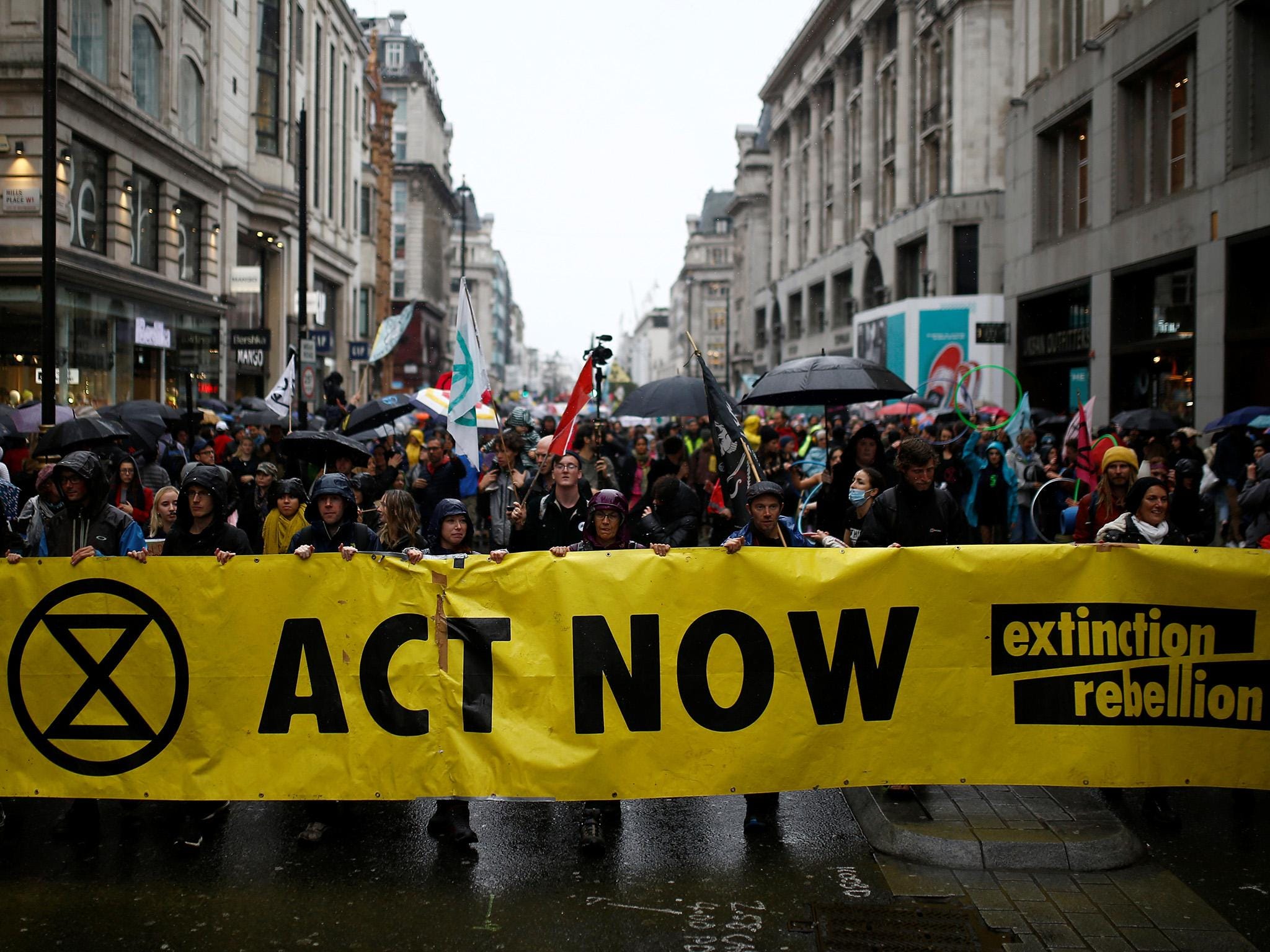
News articles from mainstream outlets that have discussed birdwatching’s growth focus largely on the individual benefits, divorced from the wider socio-political context that comes with it. Colour me shocked that this is not being interrogated by such sources. It is inconceivable that Extinction Rebellion’s presence from 2018-2021 and naturalism becoming a pursuit of over 750,000 young people are not linked in some way - as The Guardian note, this figure is an 1088% increase since 2018.
Pull away the binoculars and the bigger picture is clear. A hobby that offers introverts a reason to go out, nerds an opportunity to plunder untouched educational plains, and the quietly political to stake their ideological claim. No talking required, entirely self-paced, and a soft civic touch. Completely free if you want it to be, too. It’s the perfect sport for socialism.
Soon Westminster will be flooded with thousands of birdwatching disciples, looking awkwardly around as they muster up the courage to make eye contact and say a passing ‘hiya’ to each other before looking away immediately. They’ll all be in walking boots and waterproofs, and sipping from their flask a home-made hot drink. All of them will be looking to the sky, regretfully only to see wood-pigeons flying over from St James’s Park. The more radically inclined will be cordoning off Parliament Square with all their might, throwing seed across the floor to form a wall of communist crows and Marxist magpies to stop incoming traffic from entering. Everyone will protest for the preservation of wooded areas (or something of that ilk), and it will be inspired by the once roaring flames of Extinction Rebellion. Mass incarceration for holding up signs will continue, obviously.
And with it the first ever anarcho-socialist-avian street commune will be born. Not playing on their phones, but taking care of business.
I will be there - will you, tender comrade?